
The Training Zone
Your fitness journey is uniquely yours, and this month’s Training Zone is here to help you make it even better. We’re sharing practical ways to personalize your workouts, an uplifting member story, recovery tips with massage therapy, a how-to on using the hack squat machine, and smart nutrition ideas to fuel your strength goals. Let’s make your next workout your best one yet.
Why Personalizing Your Workout Is the Key to Real Results
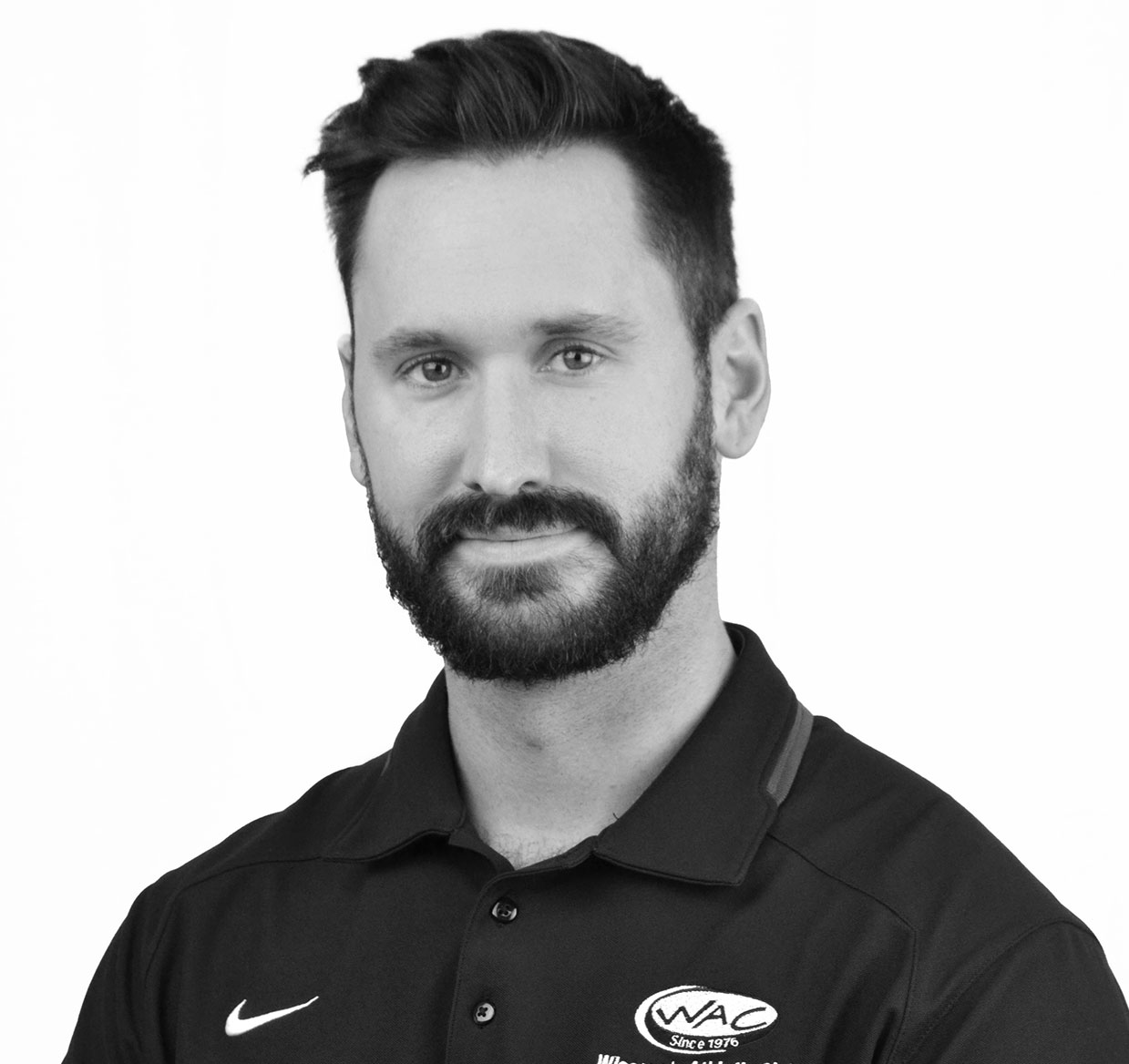
BY NICK VENTURINI, PERSONAL TRAINER
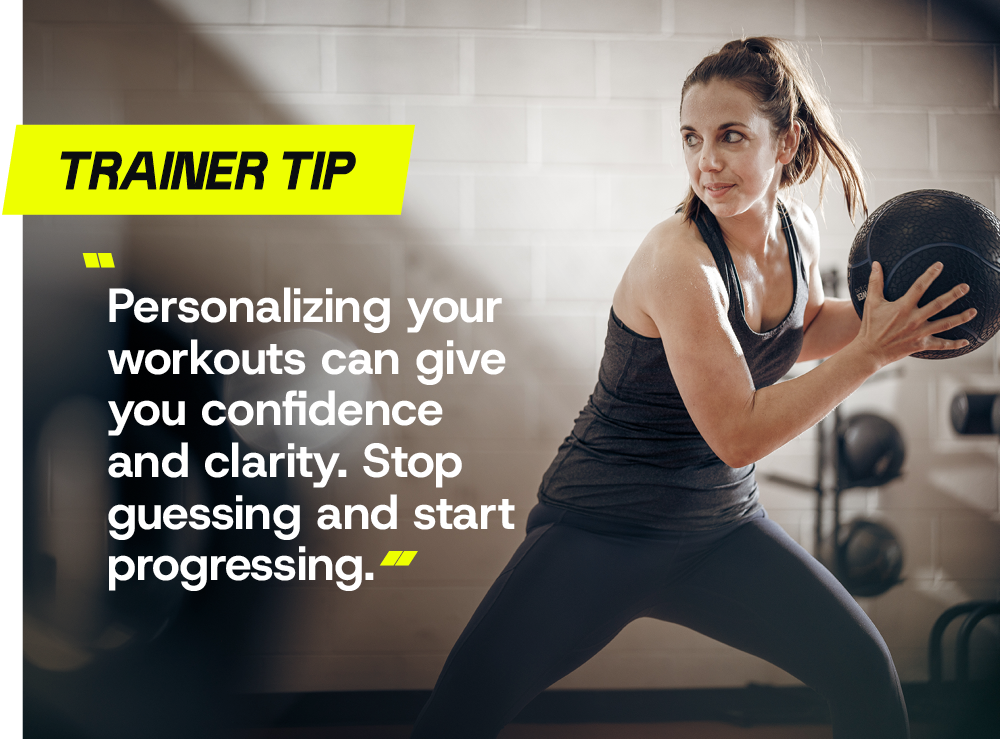
Ever feel like you’re putting in the work at the gym but not seeing the results you hoped for? It’s not always about working harder. It’s about working smarter. One of the biggest reasons progress stalls is because the workout isn’t built for you. Your goals, lifestyle, and schedule are unique, so your training should be too. Personalizing your workout and setting clear goals keeps you motivated, helps you track progress, and makes the journey more enjoyable.
How to Make Your Workout Work for You:
Read More
Start with a goal
Whether you want to build strength, lose body fat, improve mobility, or ease aches from an old injury, define a specific goal and set a realistic timeline. A clear target gives your training purpose and focus.
Know your starting point
Take time to assess your current fitness level and movement patterns. Understanding where you are now ensures your plan fits your body’s needs and abilities.
Match your workout to your goal
Not all workouts are created equal. Using the right training phase such as stability, strength, or power can get you to your goal faster while minimizing the risk of burnout or injury.
Track your progress
Keep a log of your workouts, reps, and weights. Seeing improvements over time not only keeps you motivated but also helps you make smart adjustments when needed.
Make it yours
The best workout is the one you’ll stick with. Choose a routine that fits your schedule, interests, and lifestyle so staying consistent feels natural, not forced.
When your workouts are designed around your body, your goals, and your lifestyle, everything changes. You start moving better, feeling stronger, and looking forward to your training sessions. More importantly, you stay committed for the long haul. The best results come from intentional training, not just harder training.
Ready to get started?
If you’re unsure where to begin, we’ve got you covered. We’ll help you set clear goals, create a plan that works for you, and give you the confidence to crush it every step of the way.!
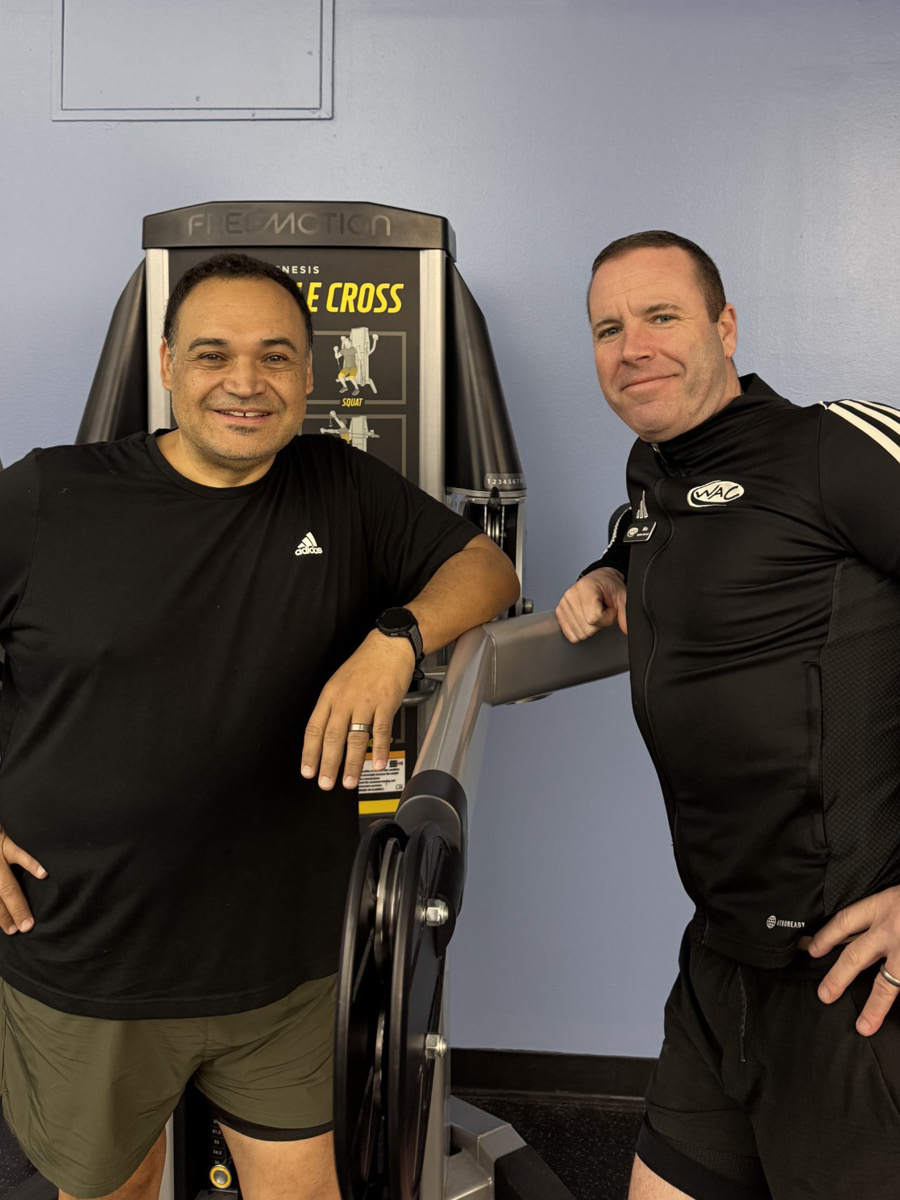
Trainer & Member Spotlight
MEMBER: EDUARDO
TRAINER: MIKE
The WAC Lake Country is proud to feature our member spotlight on Eduardo Zarate, a dedicated member and personal training client of Mike Lederer since 2020. Eduardo’s story is one of perseverance, dedication, and love. It is a journey that continues to inspire everyone around him.
In April 2020, Eduardo made a life changing decision. At the time, he weighed 344 pounds, his health was in decline, and he found it increasingly difficult to keep up with his young son, an active Boy Scout. Determined to change the trajectory of his life, Eduardo committed himself to better health and fitness.
By October 2021, Eduardo chose to take a significant step forward by undergoing bariatric surgery, while also increasing his training sessions with Mike. His hard work paid off quickly. By August 2022, he had lost 90 pounds and was able to join his son and fellow scouts on an unforgettable 30-mile backpacking trip near Yellowstone National Park. But for Eduardo, this was only the beginning.
In early 2023, a new challenge emerged: a group of local scouts, including his son, planned a backpacking trip to Philmont Scout Ranch in New Mexico, one of the Boy Scouts of America’s four high adventure destinations. Eduardo knew this was a once in a lifetime experience he wanted to share with his son. However, there was a strict weight requirement. For his height, the maximum was 220 pounds, with only a five pound allowance for clothing and footwear.
Having heard of trips being cancelled because chaperones missed the limit by just 2 pounds, this was all the motivation he needed to not let his son (and 7 other scouts) down. In January 2024, he met with Mike to develop a focused training plan that would prepare him to hike 30 miles with a 40 pound backpack at elevations between 7,500 and 10,000 feet. With the guidance of his doctor, a nutritionist, and Mike’s expertise, Eduardo committed fully to the challenge.
On July 22, 2024, at Philmont Scout Ranch, Eduardo underwent the required medical checks and stepped onto the scale. The numbers read 220.5 pounds, just enough to make the cut! He had achieved his goal. For Eduardo, the true reward was not just completing the trip, but making lasting memories with his son, moments he describes as “immeasurable.”
Today, Eduardo can still be found training with Mike at Lake Country, his trademark smile and positive energy lighting up the room. His story is a reminder of how determination, fueled by love, can transform lives. Eduardo’s journey continues to inspire those around him, encouraging others to pursue their goals and embrace life with optimism.
A big shoutout and heartfelt thanks to Eduardo for sharing his incredible journey. We are all so proud of you!
How Massage Therapy Enhances Your Workout
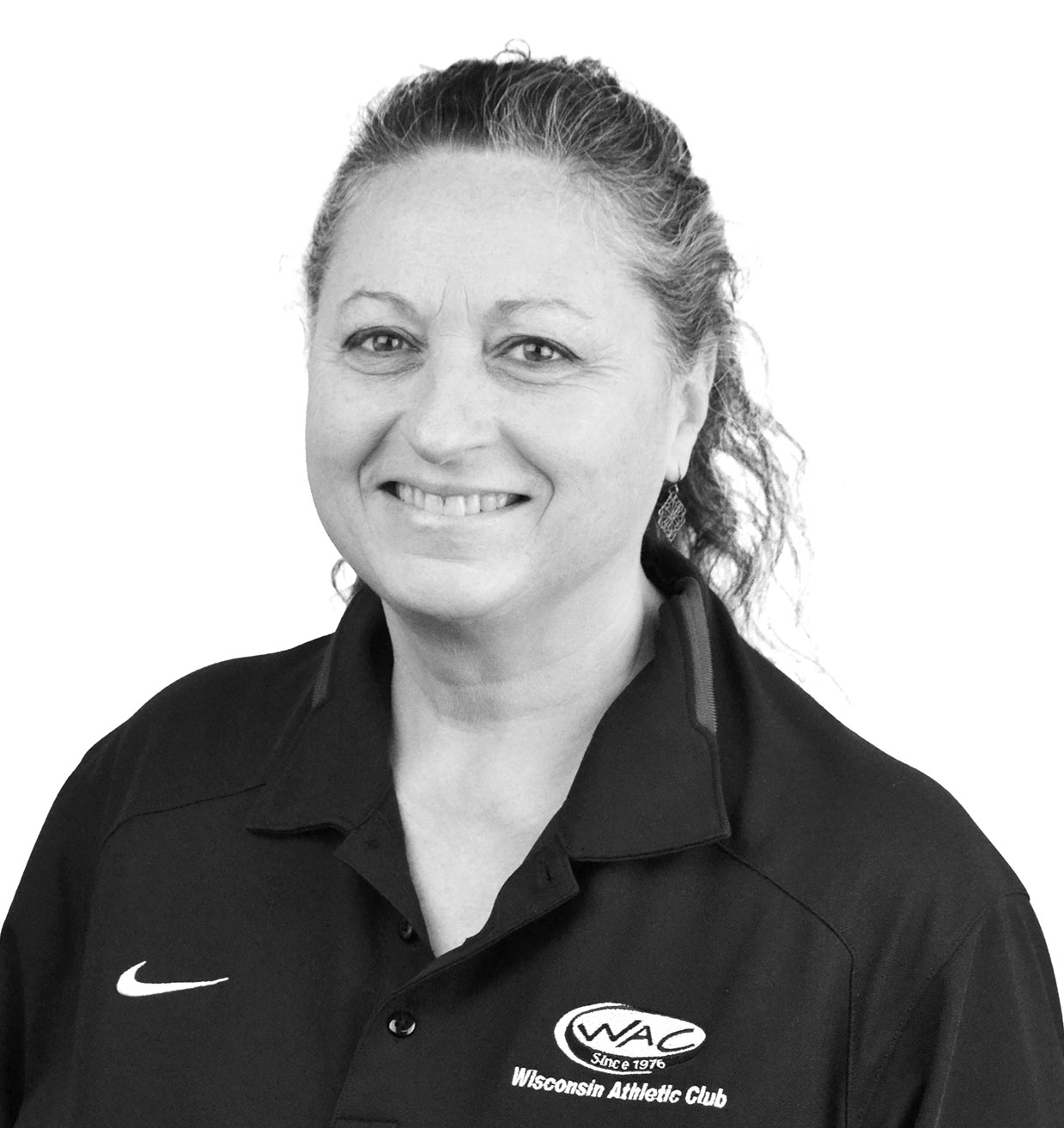
BY MARY JANE MORRIS, MASSAGE THERAPIST
Working in an athletic club environment, I am often asked how a massage can benefit someone following a routine exercise program (with or without a trainer) or assist someone training for an athletic event. Here are just a few examples of how massage therapy can enrich and enhance your regular workout.
Reduces Muscle Pain and Tightness
After a workout, muscles can often feel sore or stiff. Massage therapy helps flush out toxins and relieve knots, reducing minor tension and discomfort.
Improves Blood Circulation and Lymphatic Flow
Blood and lymphatic flow increase during a massage, which not only brings fresh nutrients to muscles and body tissues but also removes waste from the body. This process can help reduce muscle fatigue and promote faster recovery after a workout.
Increases Range of Motion
By improving range of motion and flexibility, massage can help lower your risk of injury during and after exercise.
Restores Energy
Massage can boost low energy levels and alleviate fatigue, improving overall performance, motivation, and sleep—all essential for athletic performance.
Relieves Stress
Physical or emotional stress can affect both body and mind. Reducing stress and anxiety through massage can improve sleep quality, enhance mood, and help lower the risk of injury.
For more information on how massage therapy can complement your workout, and to find out which type of massage is best suited for you, speak with one of our massage therapists today!

How Massage Therapy Enhances Your Workout
BY MARY JANE MORRIS, MASSAGE THERAPIST

Working in an athletic club environment, I am often asked how a massage can benefit someone following a routine exercise program (with or without a trainer) or assist someone training for an athletic event. Here are just a few examples of how massage therapy can enrich and enhance your regular workout.
Working in an athletic club environment, I am often asked how a massage can benefit someone following a routine exercise program (with or without a trainer) or assist someone training for an athletic event. Here are just a few examples of how massage therapy can enrich and enhance your regular workout.
Reduces Muscle Pain and Tightness
After a workout, muscles can often feel sore or stiff. Massage therapy helps flush out toxins and relieve knots, reducing minor tension and discomfort.
Improves Blood Circulation and Lymphatic Flow
Blood and lymphatic flow increase during a massage, which not only brings fresh nutrients to muscles and body tissues but also removes waste from the body. This process can help reduce muscle fatigue and promote faster recovery after a workout.
Increases Range of Motion
By improving range of motion and flexibility, massage can help lower your risk of injury during and after exercise.
Restores Energy
Massage can boost low energy levels and alleviate fatigue, improving overall performance, motivation, and sleep—all essential for athletic performance.
Relieves Stress
Physical or emotional stress can affect both body and mind. Reducing stress and anxiety through massage can improve sleep quality, enhance mood, and help lower the risk of injury.
For more information on how massage therapy can complement your workout, and to find out which type of massage is best suited for you, speak with one of our massage therapists today!

The Hack Squat Machine: Your Lower Body’s New Best Friend

BY RYAN MAAS, PERSONAL TRAINER
Looking to elevate your leg day? The hack squat machine is your go-to tool for building strong legs. Whether you’re just starting your fitness journey or a seasoned lifter, this machine delivers results by isolating key lower body muscles while supporting your back. It’s a smart, safe, and effective way to build strength and power.
QUICK HACKS:
Targeted Muscle Activation
Directly targets your quads, glutes, and hamstrings while taking the load of a barbell off your back. Unlike barbell squats, hack squats place less stress on the spine, making them a safer option for individuals with back concerns. The machine’s design provides support, minimizing the risk of injury.
Beginner Approved
The easy-to-use setup makes it perfect for those learning proper form or returning to fitness. Hack squat machine has the added benefit of safety with its easy to unrack and rerack. This machine can be used safely without a spotter.
Increased Load Capacity and Form
The stability offered by the hack squat machine allows members to lift heavier weights safely, which can lead to greater strength gains. Being placed in a stable position to do your squat can also help focus on your knee placement and proper breathing.
Stronger Legs, Smarter Training
We’re all about helping you move better, feel stronger, and train smarter. The hack squat machine is just one of many strength training options available at the WAC, offering the perfect balance of support and intensity for your lower body workouts. Whether you’re building muscle, boosting performance, improving overall fitness or just trying to get a leg up on life.
Ready to Hack Your Leg Day?
Come try the hack squat machine next time you’re at the WAC-North Shore. Talk to one of our certified personal trainers on how to use the machine or if you need a new program that challenges you.
Fuel Your Strength: Nutrition Strategies for Peak Performance

BY JEANNE ARNOLD, PERSONAL TRAINER & CERTIFIED NUTRITION COACH
In the world of strength training, nutrition is crucial not only for performance but also for muscle development and recovery. Understanding proper nutrition can be one of the biggest challenges. Here are a few strategies you can incorporate now to enhance your strength training game.
1. Food Equals Fuel
For our bodies to perform at optimal levels, we need to view the food we eat as fuel—not as a reward or merely something we need to survive. The food we consume tells our bodies what to do. When it comes to strength training, food fuels performance, aids in muscle repair, and supports recovery. Now that we know the importance of nutrition, what should we be eating? Let’s look at the three main macronutrients and how they support strength training.
2. Protein
Protein is key for muscle growth and repair. Aim for 1 gram of protein per pound of ideal body weight daily, making up 30–40% of your diet. Try to get most of your daily protein from whole foods such as lean meats, fish, eggs, dairy, beans, and tofu. Animal proteins are generally the most efficient sources, but you can also meet your protein goals with a vegan lifestyle.
3. Healthy Fats
Healthy fats are essential for hormone production and overall health. These include avocados, nuts, seeds, nut butters, and fatty fish. Healthy fats should make up about 25–30% of your diet.
4. Complex Carbohydrates
Carbohydrates are crucial for energy and should make up 55–60% of your diet to help fuel workouts. Examples of complex carbohydrates include whole grains, fruits, vegetables, potatoes, and sweet potatoes.
5. Timing
While we generally want to avoid spiking glucose and insulin levels throughout the day, pre- and post-workout are the exceptions. Spiking these levels before and after a workout quickly switches the body into an anabolic (muscle growth) state and helps shuttle nutrients into the muscles.
- Pre-workout (60–90 minutes before): Aim for 15–20 grams of protein and 25–50 grams of carbohydrates.
- Post-workout (within 30–45 minutes): Aim for 20–30 grams of protein and 25–50 grams of carbohydrates.
If you’re struggling to see the results you want from your workouts, start incorporating these tips to help you reach your goals. For more information on nutrition for strength training or to create a personalized nutrition plan, contact the Fitness Manager at your home club. They’ll be happy to connect you with a nutrition coach.

Fuel Your Strength: Nutrition Strategies for Peak Performance
BY JEANNE ARNOLD, PERSONAL TRAINER & CERTIFIED NUTRITION COACH

In the world of strength training, nutrition is crucial not only for performance but also for muscle development and recovery. Understanding proper nutrition can be one of the biggest challenges. Here are a few strategies you can incorporate now to enhance your strength training game.
1. Food Equals Fuel
For our bodies to perform at optimal levels, we need to view the food we eat as fuel—not as a reward or merely something we need to survive. The food we consume tells our bodies what to do. When it comes to strength training, food fuels performance, aids in muscle repair, and supports recovery. Now that we know the importance of nutrition, what should we be eating? Let’s look at the three main macronutrients and how they support strength training.
2. Protein
Protein is key for muscle growth and repair. Aim for 1 gram of protein per pound of ideal body weight daily, making up 30–40% of your diet. Try to get most of your daily protein from whole foods such as lean meats, fish, eggs, dairy, beans, and tofu. Animal proteins are generally the most efficient sources, but you can also meet your protein goals with a vegan lifestyle.
3. Healthy Fats
Healthy fats are essential for hormone production and overall health. These include avocados, nuts, seeds, nut butters, and fatty fish. Healthy fats should make up about 25–30% of your diet.
4. Complex Carbohydrates
Carbohydrates are crucial for energy and should make up 55–60% of your diet to help fuel workouts. Examples of complex carbohydrates include whole grains, fruits, vegetables, potatoes, and sweet potatoes.
5. Timing
While we generally want to avoid spiking glucose and insulin levels throughout the day, pre- and post-workout are the exceptions. Spiking these levels before and after a workout quickly switches the body into an anabolic (muscle growth) state and helps shuttle nutrients into the muscles.
- Pre-workout (60–90 minutes before): Aim for 15–20 grams of protein and 25–50 grams of carbohydrates.
- Post-workout (within 30–45 minutes): Aim for 20–30 grams of protein and 25–50 grams of carbohydrates.
If you’re struggling to see the results you want from your workouts, start incorporating these tips to help you reach your goals. For more information on nutrition for strength training or to create a personalized nutrition plan, contact the Fitness Manager at your home club. They’ll be happy to connect you with a nutrition coach.